ZeroW founder Thomas Lilley has coached more than five 400kg squats in competition. In this video, filmed at ZeroW Wales, he shares his three best exercises to improve your squat: what each one fixes, and exactly how to do it.
1. Leg press
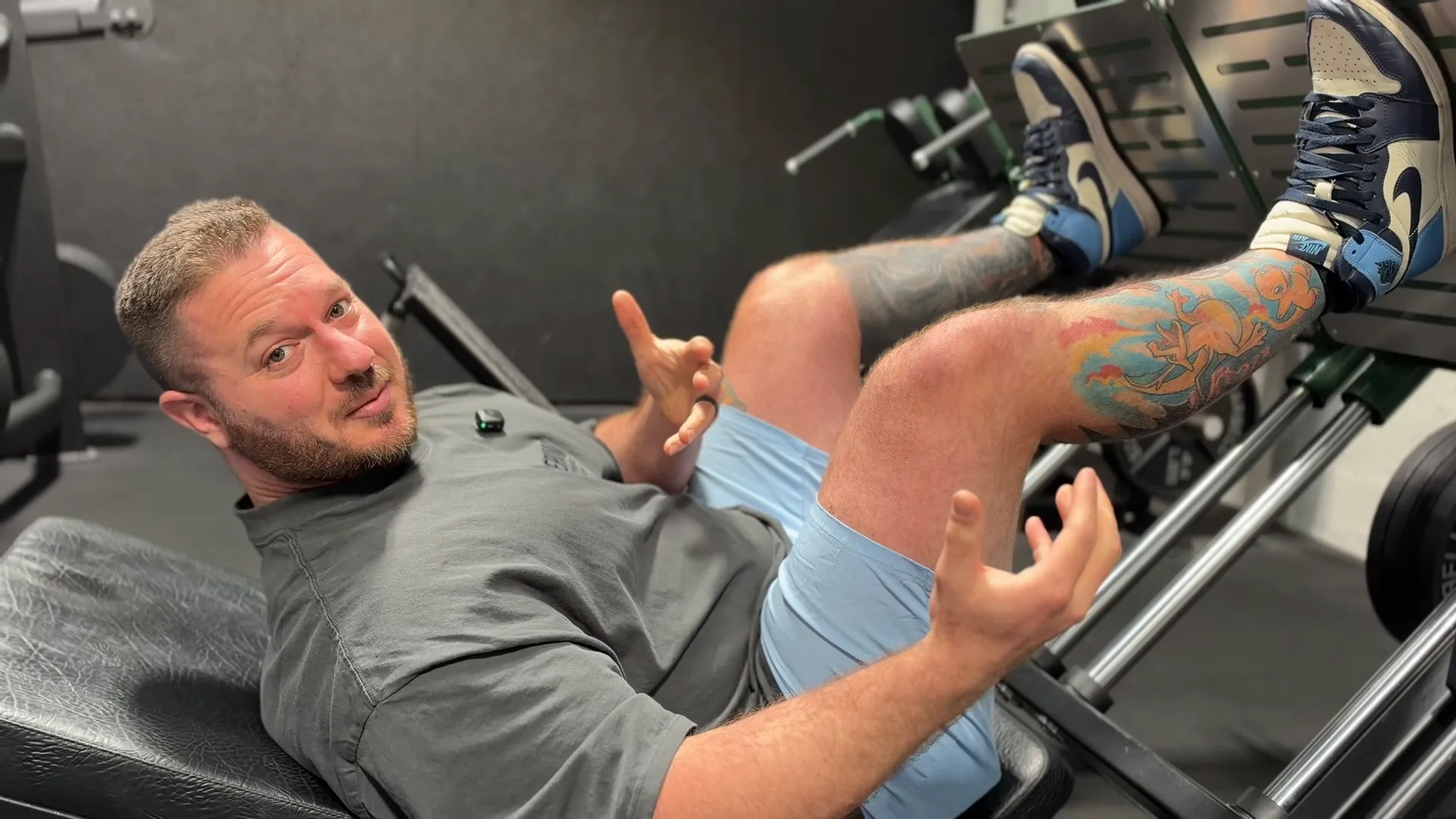
The leg press lets you train directly what's happening at your hips and legs, without the complication of bracing and holding your upper back. And unlike a squat, you can actually watch your legs while you do it.
When it comes to the squat, the biggest bottleneck is leg strength, and the ability to transfer that strength up into the bar. If you need to isolate what's happening at the hips, take it out of the squat and onto the leg press. A hack squat, pendulum squat or any other leg machine works too, but the leg press is great because you can see what you're doing.
How to do it
- Use your squat stance. Set your feet in the same position you squat in, or the position you're working towards. If you squat in one stance and leg press in another, there's less carryover.
- Match your squat depth. Go through the same range of motion as your squat. This matters most if you struggle to hit depth: doing all your leg work high just reinforces it.
- Load it heavy, but within good technique.
- Hold yourself down into the seat so your pelvis stays stable.
- Twist your quads away from each other, enough to feel it, and hold that all the way down and all the way up. That's the cue we use at ZeroW for using the hips the same way as in the squat.
Because you can watch your legs, you can correct issues as they happen. If your knees cave in at the bottom, push them out. If you roll onto the outside of your feet, keep your feet flat. Twist your quads out and make sure your knees track straight over your feet.
2. RDL for bracing
One of the most common ways a squat breaks down is the brace, and it shows up in one of two ways: lifters either arch their back, or fold over and lose their brace.
To fix it, you need to build a rigid torso under load while your torso is doing what it does in the squat. You won't get that from ab work or farmer's carries. The RDL loads your spine and makes you hold a braced, rigid position while you hinge, which makes it ideal.
The key is to lock into your brace and hold it through the whole movement, matching the position you want in your squat:
- If you tend to arch, you'll be tempted to arch on the RDL too. Use it to practise holding your brace without arching.
- If you tend to round, lock in your back and your brace, and keep it there as you go through the movement.
3. Single-leg leg extension
This one is a little more scientific. It's about motor unit recruitment: your muscles' ability to recruit as many fibres as possible to move a weight. Your quads, like your pecs, respond very well to training for it, so if you want to get the most out of your legs in the squat, it makes sense to train for it directly.
How to do it
- Be explosive. Move fast, within good technique, and control the lowering.
- Leave reps in the tank. Pick a weight you could do for five reps and do three, or one you could do for ten and do seven or eight.
- Lock yourself in. Pull yourself down into the seat. With isolation work you don't want anything else moving or any body English. The only thing moving should be your knee.
Bonus: the upper back
If Thomas added a fourth, it would be for the upper back. The leg press covers the hips and the RDL covers the brace, but to directly train the shoulders and upper back, you want a row performed in a very specific way. Jordan covers it in our top 3 bench press accessories.
Want more on squat technique? Read Chasing Global Technique Part 2: Squats, and subscribe on YouTube for new videos every week.