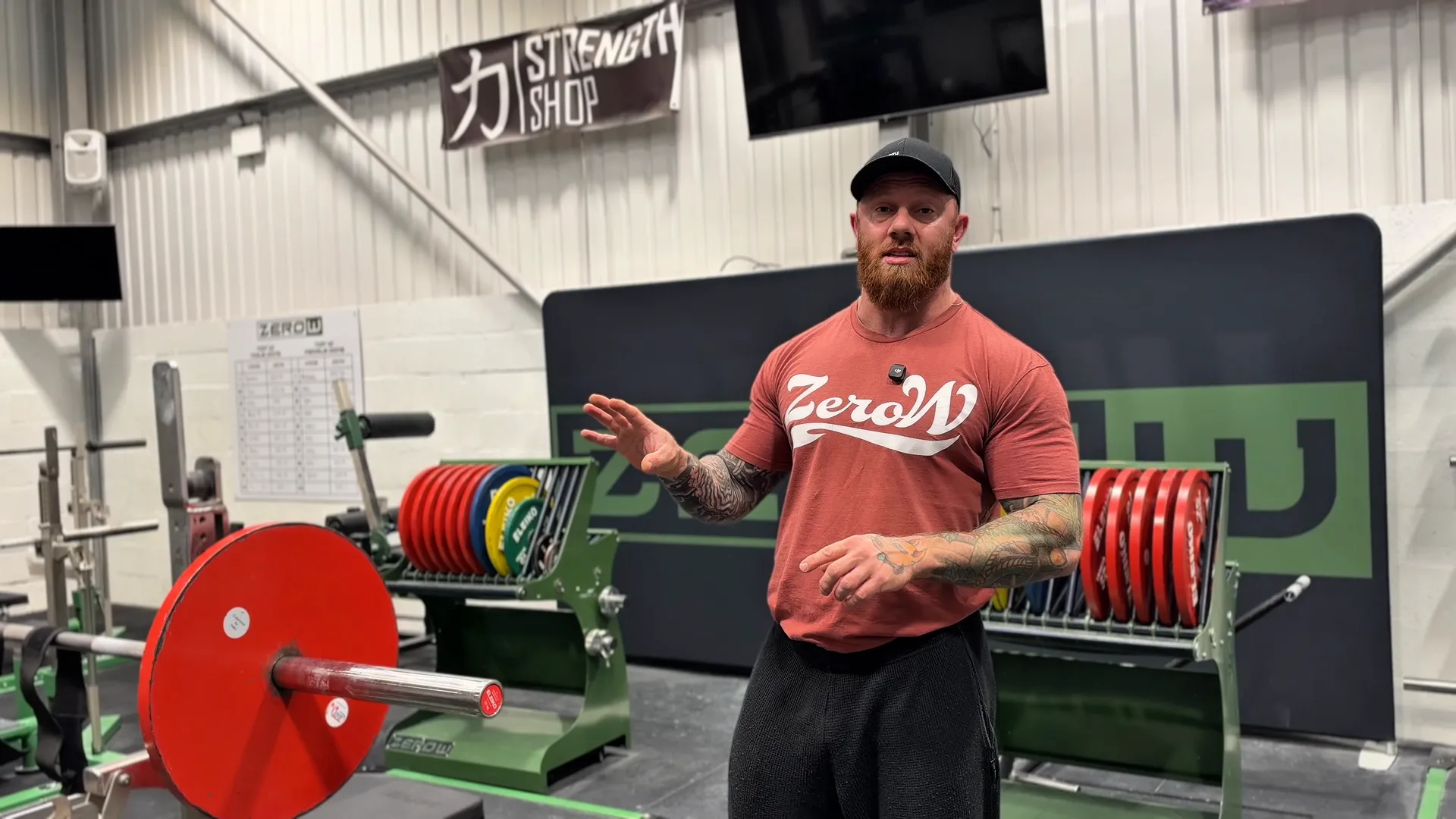
This is the first episode of Come Train With Me, a new series where Jordan Helyer takes you through his own sessions. He runs the same style of programme we write for our clients, so you'll see how a ZeroW session is put together and why each exercise is there, and how it all ties back to the squat, bench press and deadlift.
Training without a competition coming up
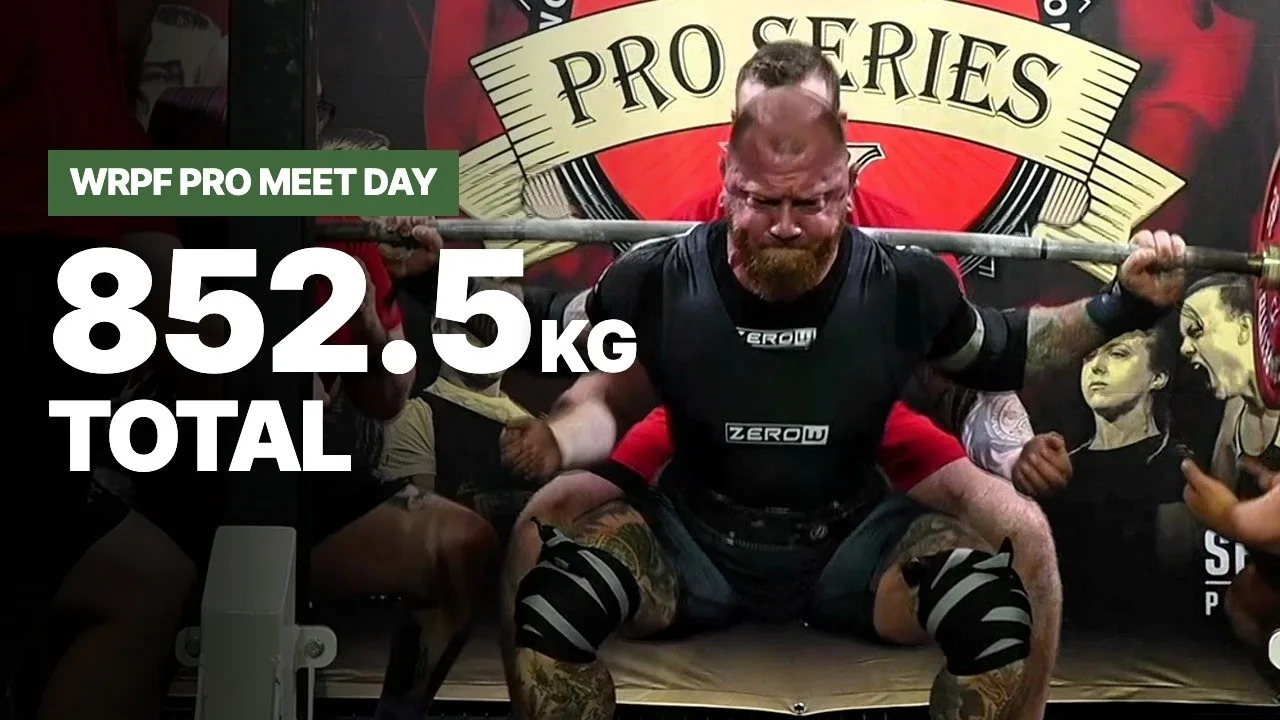
Jordan is two weeks out from the WRPF Pro, and he's just written his next block. A lot of lifters finish one competition and immediately look for the next. But there will be times when you don't want a competition looming, whether that's for your head or because you simply want to build.
That's when you dedicate a period of time to getting bigger and stronger, and bringing up the physical qualities that let you express more strength in the competition lifts. For Jordan, the goal of this block is general hypertrophy: building muscle.
Should you train when you're ill?
Jordan filmed this session with a sore throat, a cough and tight sinuses. Whether you should train when you're unwell depends on how ill you actually are, but it doesn't have to mean stopping altogether. His approach, in order:
- Bring the intensity down first and keep everything else the same.
- If that's still too much, cut intensity on the main lift, but keep it as close to the plan as you can, because it's the priority.
- Then cut some volume and intensity from the accessories.
- If you still need to, drop the last exercise or two and condense the session.
There's no need to be a hero. On the day, Jordan took his bench down from the planned 132.5kg to 130kg and kept the volume.
Today's session
Here's the session as it's written in Jordan's programme. "RIR 1, 0" means the first set is taken to one rep in reserve and the second to failure.
| Exercise | Sets x reps | RIR / load |
|---|---|---|
| Close-grip bench press | 3 x 8 | 130kg (132.5kg planned) |
| Chest flyes | 2 x 10–12 | 1, 0 |
| Dumbbell row | 2 x 8–10 | 1, 0 |
| Wide-grip lat pulldown | 2 x 8–10 | 1, 0 |
| Cable pullovers | 2 x 8–10 | 1, 0 |
| Single-arm bicep curls | 2 x 8–10 | 1, 0 |
| Tricep extensions | 2 x 10–12 | 1, 0 |
Close-grip bench, 3 x 8 at 130kg
Jordan warmed up with 70kg for 6 and 120kg for 3, then went straight to 130kg for his three working sets. And always set the safeties, whether you're benching heavy or not. A missed rep can do a lot of damage to your face, and to the equipment.
The setup is the same as his competition setup, up on his toes. With his feet back he gets a bigger arch and holds his upper back much better. Going flat-footed would add a little range, but he'd lose some of that tightness and control of his shoulders.
The grip is what changes. He normally benches with his index finger on the rings, the maximum legal width. For the next 10 weeks he's benching with his little finger on the rings. He's only benching once a week in this block, and most lifters who bench wide should do some close-grip work. The extra range and the harder variation both suit a hypertrophy goal.
A light touch on the chest. With more range, there's more demand on control at the bottom. Jordan's cue: imagine your chest is made of glass and you don't want to crack it. Touching lightly helps him hold his shoulders back and down, and makes each rep slightly harder, because in competition he uses a heavier touch.
Reset your shoulders on higher-rep sets. You'll see him pause at the top and reset his shoulders partway through a set. When you set your shoulders at the start, you'll usually lose a little of that position as the reps go on. A quick reset means the last, hardest reps are done in the right position, which carries over best to your heavy singles.
High cable pec fly
After three sets of eight on close-grip bench, Jordan's pecs are already pumped, so he follows up with direct pec work while he still has the energy to push it hard. The pecs drive most of the power in a bench press, and training them at high intensity, close to failure, gives him the best chance to grow them. He's switched from a machine pec deck to the cable for some variation.
Rest periods
- Main lift: around five minutes, or until you feel recovered, so the quality and output stay high.
- Accessories: two to three minutes. That builds work capacity without cutting the rest so short that your reps and effort drop off.
- Adjust for you: shorter if you're in a calorie deficit and trying to lose weight, longer if your fitness is lower.
Dumbbell row
On accessories, use as much weight as you can, but never at the expense of technique. Jordan keeps his rows strict, without throwing his body into them, so the target muscles do the work. Strict technique, close to failure, with a controlled tempo gives you the best chance to build muscle.
Wide-grip lat pulldown
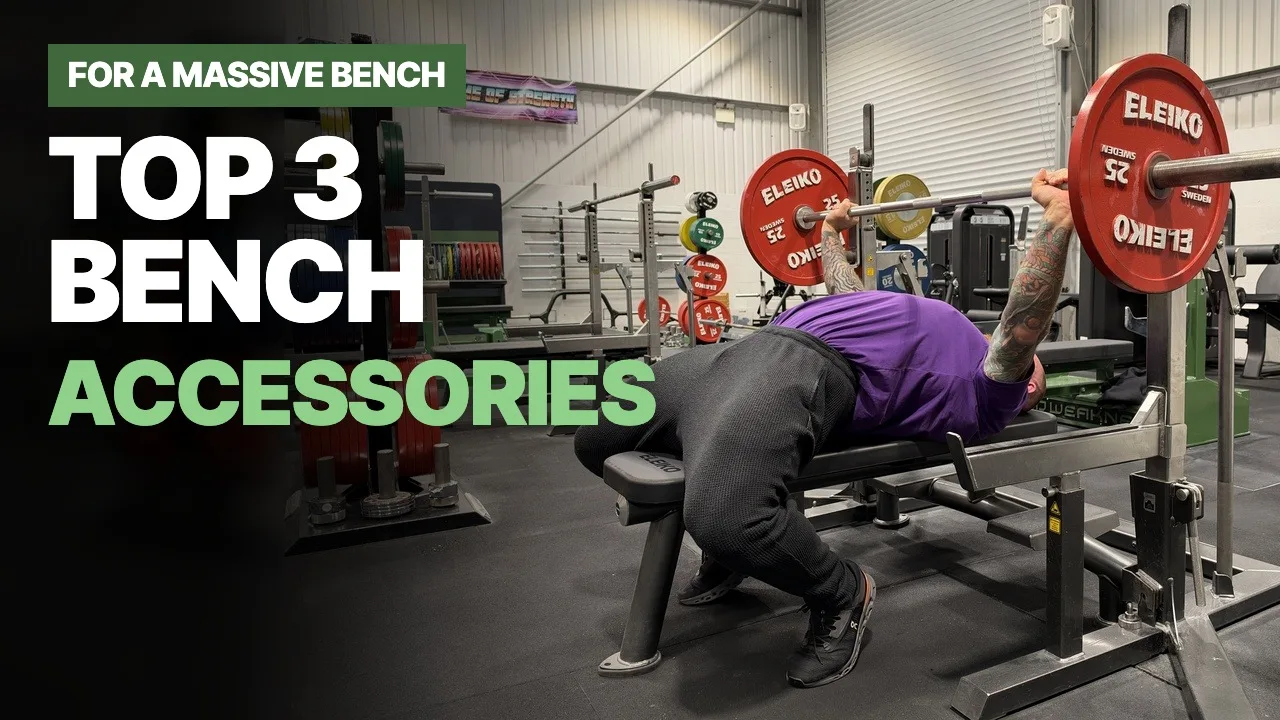
Scapular depression is the weakest part of Jordan's shoulder control on the bench, so it gets two exposures a week. Here he's using the wide handle with a neutral grip, going through full range with decent load, aiming to touch the top of his chest on every rep. This is more about positional carryover than hypertrophy. For the technique, see our top 3 bench press accessories.
Incline cable pullover
This one targets the serratus, the muscle under your armpit, along with the upper back. Jordan's left shoulder blade wings slightly when he benches. Band drills and bottoms-up kettlebell presses, like the ones in his bench press warm-up, are good for priming, but to strengthen the serratus it needs to be loaded. He pulls his shoulders down, tucks his elbows and keeps his ribs down, so the movement comes from the pullover rather than arching.
Arms: cuff tricep pushdown and hammer curl
Jordan trains arms twice a week, at the end of each upper body session, in slightly different positions each time. Partly for the bench, but mainly, as he admits, because he wants big arms.
- Single-arm cuff tricep pushdown: shoulder pulled down, elbow underneath, then full range without the shoulder moving. Because it's so isolated, it's easy to take close to failure.
- Dumbbell hammer curl: not too much body English, just enough to feel the weight in the right places.
A 62-minute session
Start to finish, the whole session took 62 minutes, including filming and explaining. Powerlifting training doesn't have to take all day, especially when you're not in a competition prep. It's about understanding what you need as a lifter and choosing the exercises, loads and intensity to match.
If you want help building a plan for yourself, get in touch, or subscribe on YouTube for the next episode.