In this video, Jordan Helyer goes through three of his favourite accessories for building a bigger bench press. They're in his programmes almost constantly, whatever the lifter's experience or phase of training.
He splits them into two categories:
- Supportive strength: the muscles that hold your shoulders back and down, and keep them pinned there through the whole range of motion.
- Pressing strength: the muscles that actually move the weight, primarily the pecs.
1. Chest-supported T-bar row
This is a supportive strength exercise that mainly trains scapular retraction, your shoulder blades moving back and pinching together. Jordan rates it for three reasons:
- Adjustable handles. You can change the width of your grip and the angle of your hands, which changes the angle at your shoulder.
- It's loadable. The chest support adds external stability, so you can really push it.
- The range carries over. Your shoulder travels through a range that applies directly to the bench press.
How to do it
- Set the handles a little wider, to mimic your bench grip. Adjust them to suit you, but going wider gives you the potential for more range.
- Let your shoulders come forward slightly at the start, under control. Don't lose tension and let the weight pull you forward.
- Row while rotating your hands, and focus on pinching between your shoulder blades without letting your shoulders elevate.
The top of the row looks a lot like the bottom position of a bench press, and you can train it very hard.
2. Lat pulldown
It's a very traditional exercise, but it's high on Jordan's list because it trains the other half of the same position. Where the T-bar row is scapular retraction, the lat pulldown is scapular depression, your shoulders moving down towards your waist. When people tell you to pull your shoulders back and down, these two exercises capture exactly that.
How to do it
- Take a wider grip, so your shoulders move in a way that more closely resembles your bench position. If you want to know how grip width changes things, see our guide to cable attachments.
- Anchor yourself in the seat and let your shoulders come up a little.
- Start the movement by pulling your shoulders down, then keep pulling until the handle touches your upper chest.
- Bring your chest up and out to meet the handle. That adds a little thoracic extension, with your upper back arching slightly, which stops the head of your shoulder rolling forward.
When people go very heavy with partial range, they tend to shrug and let their shoulders roll forward. Avoid that, because it's the controlled position that gives you the best carryover to your bench.
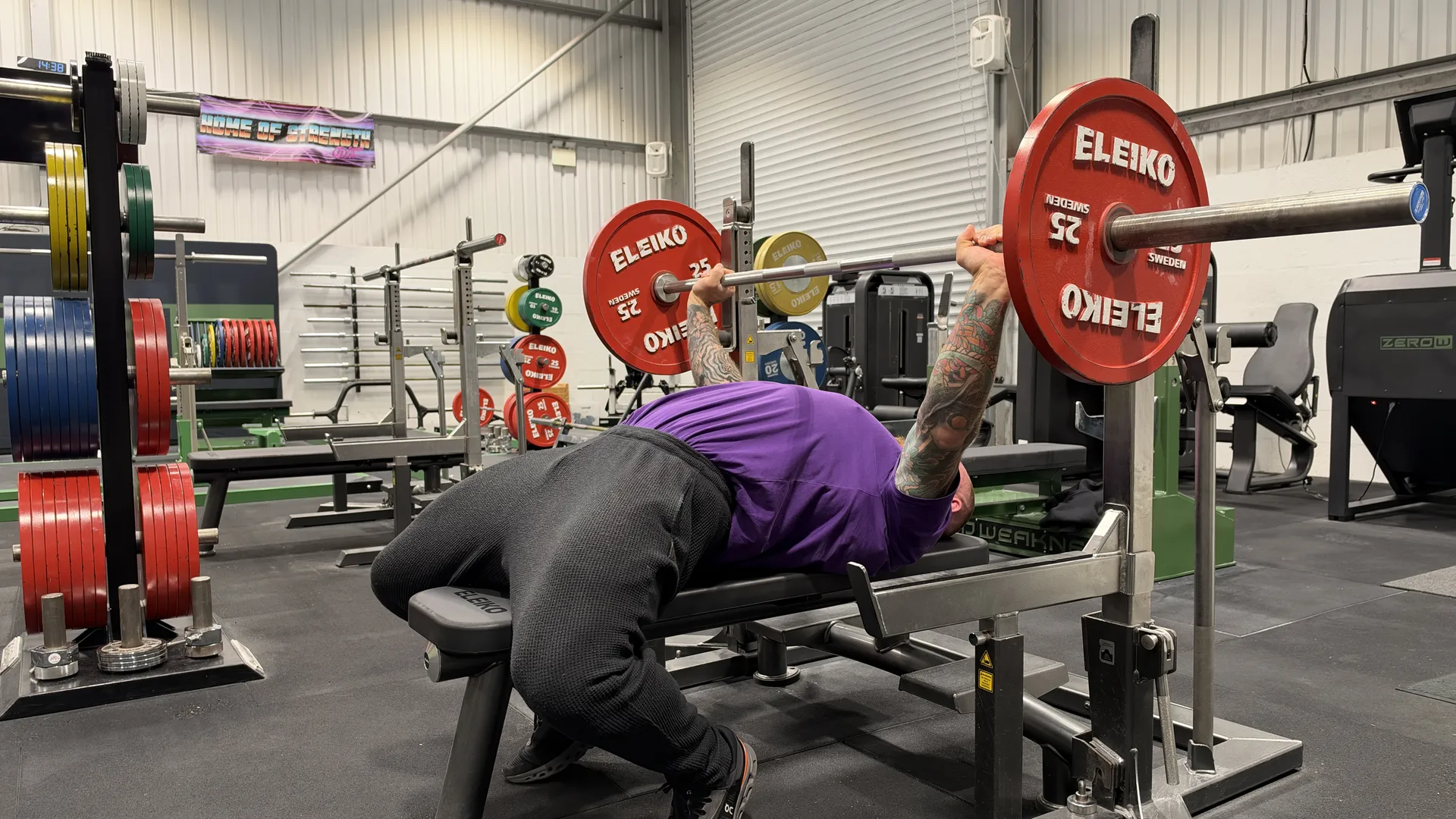
3. Dumbbell bench press
The third exercise moves on to pressing strength. It makes the top three for three reasons:
- It's unilateral. Working each side independently can potentially drive more hypertrophy, and more muscle helps build a bigger bench.
- The grip. A more neutral grip rotates your shoulder and loads it slightly differently to the pronated grip of a barbell bench press.
- The range. Experienced lifters use a big arch and a wider grip to shorten the range of motion on a barbell. Dumbbells give you that range back, which means more stress on the pecs, more muscle growth, and more general strength to apply back to your bench.
How to do it
- Start with the dumbbells on your knees, then roll back and press them up with a neutral grip.
- Don't actively pull your shoulders back and down. Let them sit in a more neutral position.
- Lower until the dumbbells just touch the outer part of your chest, then press back up.
The goal is to feel your pecs doing the work, not to be overly explosive. And if you're training at ZeroW, please don't drop the dumbbells.
If you were to make it a top five
The next two on Jordan's list would be:
- A machine chest press. Use an incline if your dumbbell bench is flat, or a flat machine if your dumbbell bench is on an incline.
- A pec fly, purely for isolation.
How hard to train them
Push these exercises to one or two reps in reserve without losing technique, and you can expect a big carryover to your bench press.
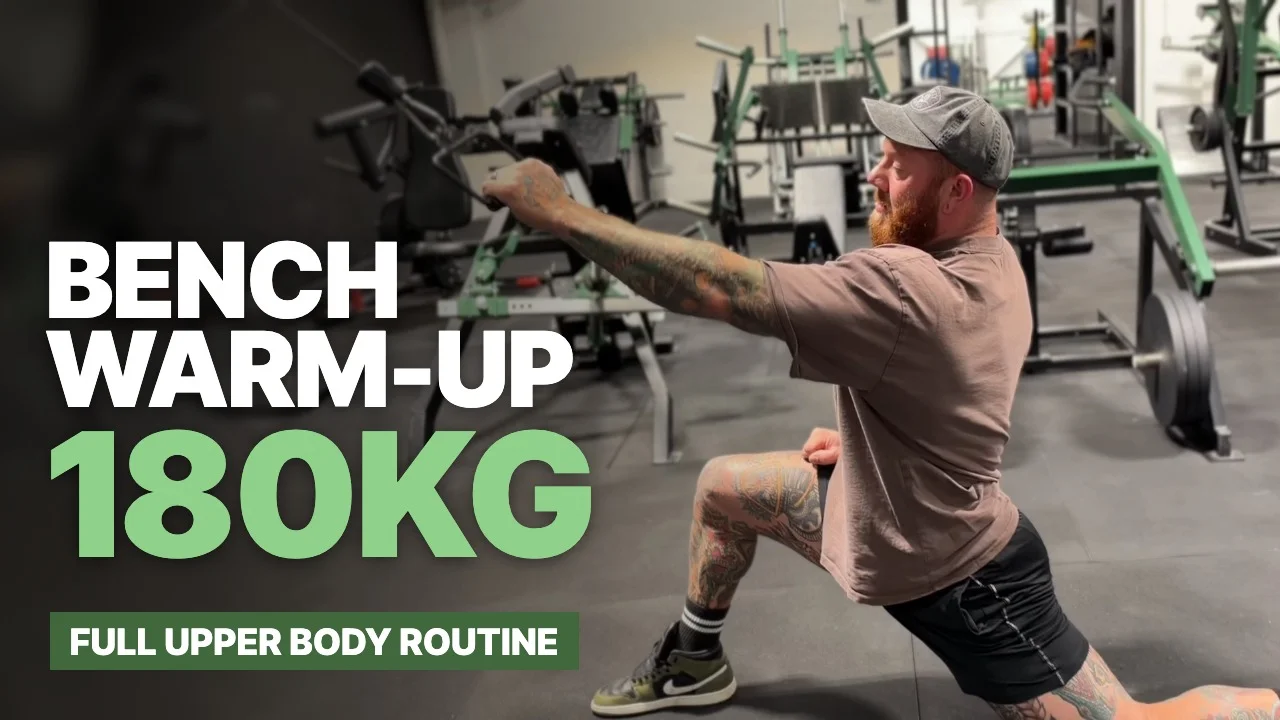
Want to warm up for it too? Watch Jordan's bench press warm-up, and subscribe on YouTube for new videos every week.