In this video, Jordan Helyer takes you through his full upper body warm-up as he peaks for the WRPF Pro. In this session he's benching up to 180kg, and the aim of the warm-up is to get his upper back and shoulders loose and switched on, so he feels good from the first set under the bar.
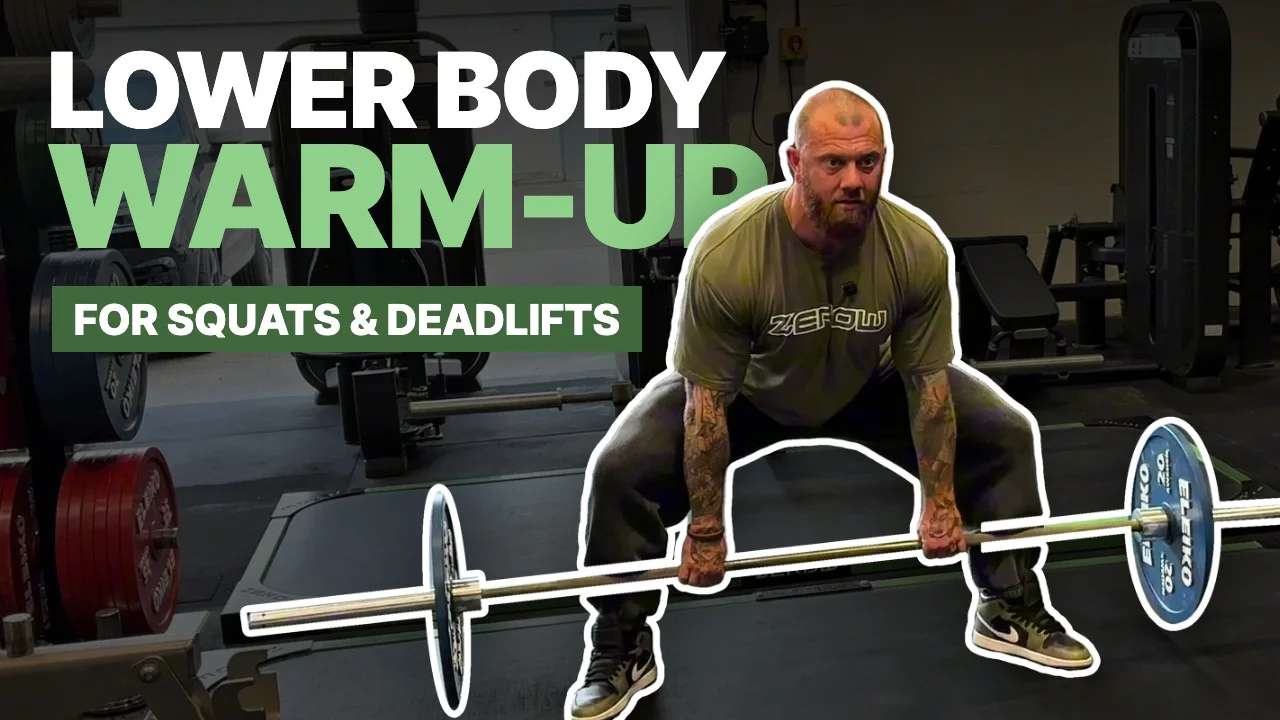
It follows the same idea as his lower body warm-up for squats and deadlifts: access the positions you need, prime the muscles that hold them, then build back into the lift.
Movement prep
1. Kneeling lat stretch
Jordan starts here because loosening the lats makes it much easier to get the shoulders back into the bench position.
- Hold a broomstick with your hands shoulder-width apart. A mirror helps you check this.
- Kneel with your elbows on a bench, then sit your weight back and draw your hands towards your head until you feel a strong stretch in your lats.
- Hold for 40 to 50 seconds.
2. Dislocates
With the lats loosened off, do 10 to 12 dislocates with a PVC pipe. Jordan finds these feel awful before the lat stretch and much smoother after it.
They also help with the arm pain some lifters get from low bar squats. Driving the chest forward in the bottom position stretches the forearm and flosses the biceps tendon.
3. The Helyer pulldown
Jordan's own variation of a high, single-arm cable pulldown, done from a long split stance.
- Take a big step back so your back hip goes into extension and you feel a stretch through the hip flexor.
- Reach forward with the cable, then pull your shoulder diagonally back and down, wrapping your shoulder blade around your back.
- Do two sets of 10 to 12.
It warms up hip extension for your arch, and scapular depression, retraction and the thoracic spine for your upper back position. All of that applies directly to the bench press.
4. Chest-supported W raise
Lying chest-down on an incline bench, with light dumbbells (Jordan uses 2kg):
- Squeeze your shoulder blades together and rotate your shoulders out as far as you can, getting your hands high.
- Hold that position as you straighten and bend your arms.
This targets upper back extension. Keep the weight light, because the point is the quality of the squeeze, not the load. Done properly, these never get much easier. "Even if someone's quite flexible, if you do this correctly, it'll suck."
5. Subscapularis band drill
With a band looped under each armpit, step back so your shoulders are pulled into internal rotation, then pull your elbows back and pinch your shoulder blades together.
- Do 8 to 10 reps, holding the last one as an isometric squeeze.
This primes the subscapularis to give you a more solid base to press from. Jordan added it after a shoulder twinge that internal rotation tended to trigger.
6. Bottoms-up kettlebell press
The last drill targets the serratus anterior, which controls the shoulder blade and stops it tilting or winging. Jordan's left shoulder blade wings slightly when he benches, so this matters for him.
- Hold a kettlebell upside down, with your elbow directly under your wrist.
- Reach your shoulder forward while keeping it down, then press overhead and lower, without letting your elbow kick out to the side.
- Do two sets of 4 to 6 reps per arm.
Expect your weaker side to be noticeably harder.
Bench warm-up sets
After the movement prep, Jordan gets under the bar. On the day in the video his warm-ups were:
| Weight | Reps |
|---|---|
| Empty bar | 5 |
| 70kg | 5, 5 |
| 120kg | 3, 3 |
| 150kg | 2 |
| 162.5kg | 1, 1 |
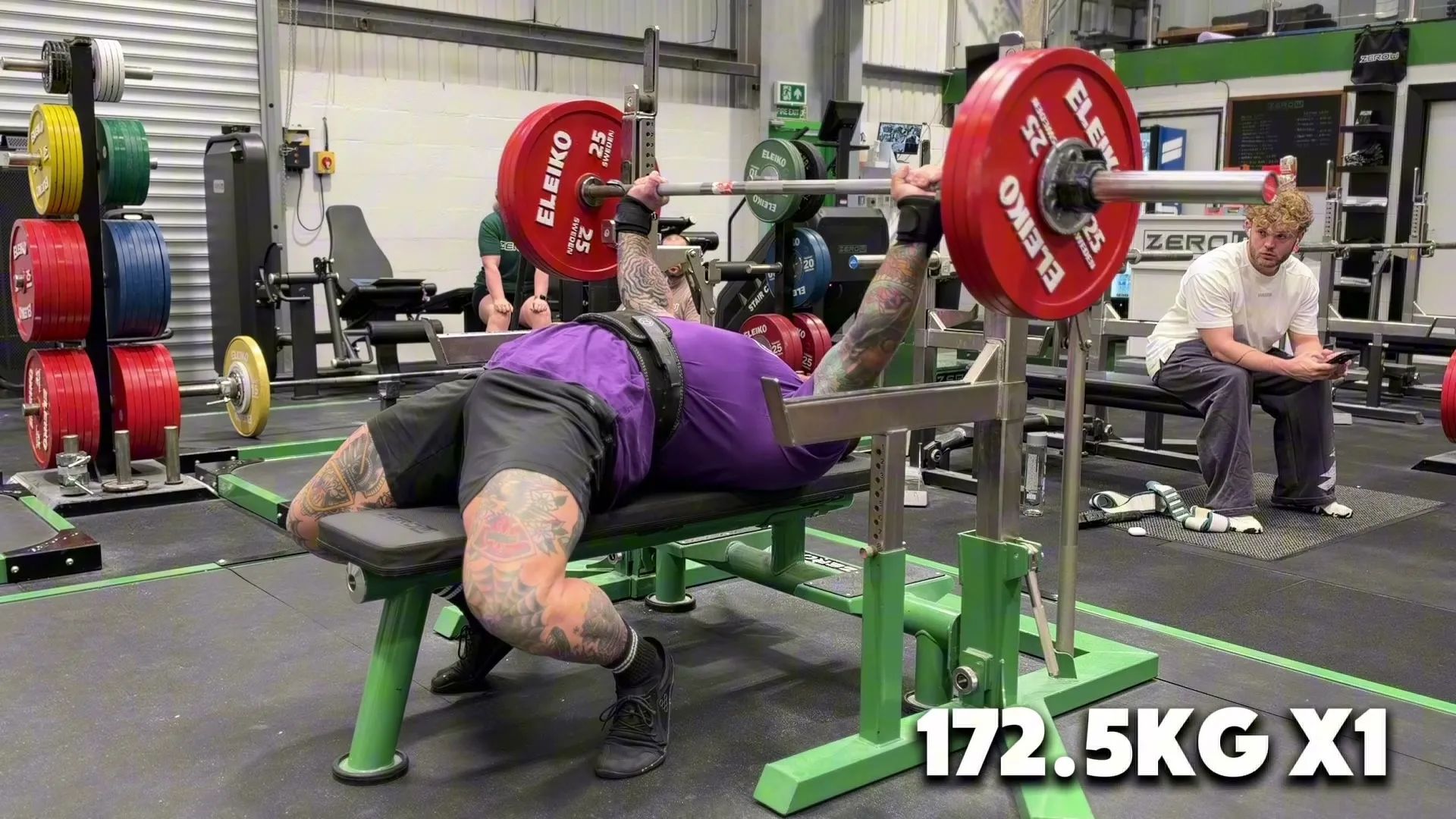
| 172.5kg | 1 |
| 180kg | 2 x 1 |
Why the warm-up matters more when peaking
Jordan is in a peaking phase, so the warm-up carries even more weight. It primes the positions he needs to hold his shape and technique under very heavy loads. In this phase, he treats his warm-ups as if they're the main work, to give himself the best chance of lifting as heavy as he can.
If you need help building your own warm-up, get in touch, or subscribe on YouTube for new videos every week.