If you're getting into powerlifting, it's easy to spend a lot on kit you don't need yet. In this video, Jordan Helyer goes through the three pieces of equipment he recommends buying first, why each one helps, and how to get more out of them as you become more experienced. Kilo, the gym dog, makes a few appearances too.
All of the kit in the video is from Strength Shop, who support Jordan and every ZeroW competition.
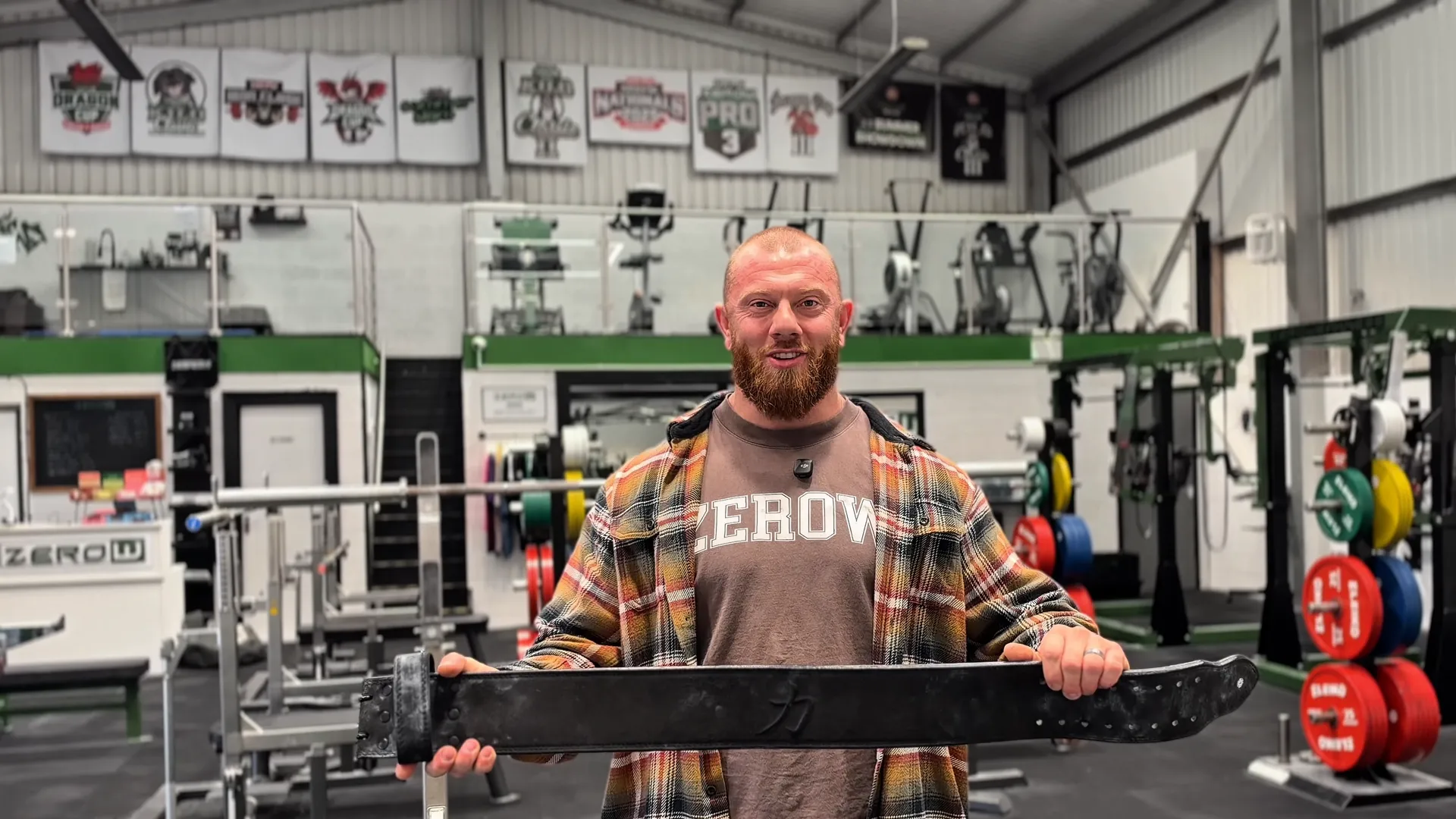
1. A lifting belt
The belt comes first, and Jordan recommends one for anyone getting into the gym. When we coach beginners in technique sessions, we tend to put a belt on them.
The common misconception is that a belt does the work for you, or instantly makes a lift safer. It doesn't. Once you've learned to brace properly, the belt gives you something to push against. That makes your brace stronger, which leads to better technical expression.
When we teach the squat and deadlift, lifters who have learned to brace and then wear a belt generally move a lot better. Over time, that means better technique, better strength and quicker results.
10mm prong belt
A 10mm belt is a little softer and flexes more, so it doesn't dig in as much when you set your brace.
- A good first belt if you're new to lifting.
- Often more comfortable for bigger lifters, and can help you get into position.
- Jordan uses his for bench press, because the thinner, more flexible belt feels better in an arched position.
13mm lever belt
If you're getting more serious, step up to a 13mm belt. Jordan's is an extra-stiff lever belt. Because it's thicker, it's stiffer and much more supportive, which suits heavy squats and deadlifts.
Whatever your experience level, a good belt is worth the investment.
2. Wrist wraps
This one is a little controversial, but wrist wraps are Jordan's second recommendation, for two reasons:
- Low bar squats. Holding a low bar position can feel horrible on the wrists for beginners. Wraps take some of that unwanted pressure off the joint.
- Bench press. Beginners haven't yet developed the coordination to keep the bar stable, so their wrists tend to roll around, and that shows up imbalances. Wraps secure the wrist, so you can focus on getting your shoulders back and down.
Flexible vs stiff wraps
Start with a flexible pair. They have a little more give, which makes them a good first wrap. Experienced lifters often stick with flexible wraps for squats, because they allow some movement while still supporting the load.
Stiff wraps of the same length hold the wrist much more rigid, so it can't extend as far. They're better suited to heavy pressing: on bench, they really lock the wrist in place and allow better technical expression.
3. Knee sleeves
Knee sleeves take away that vulnerable feeling around the knee. We often see beginners put a pair on for the first time and immediately feel the difference, and that confidence tends to improve their technique at the hip too. Jordan is a big fan of beginners using sleeves, when they feel ready for them.
Soft neoprene sleeves
7mm neoprene sleeves are flexible and slightly supportive, but not very assistive. They add a bit of warmth, support and comfort, which makes them a useful tool to have in your bag.
Stiff knee sleeves
The newer stiff sleeves are made from a much stiffer material and are far more assistive. They provide a lot of support and can add kilos to your squat.
If you're an experienced, competitive powerlifter, they're a good purchase. But don't expect a pair of stiff sleeves to fix your squat on their own. They're an addition, not a shortcut.
Jordan's top tip: periodise them. Don't lift in stiff sleeves all year round. Spend blocks of training in softer sleeves while you build strength and refine your technique, then switch to stiff sleeves for more specific phases, such as a competition prep or testing new one-rep maxes.
Bonus: lifting straps
Jordan's personal bonus buy is a pair of straps, whether you hook grip or not, for your deadlift rep work.
Taking grip out of the equation lets you focus on what actually improves your deadlift, like your upper back position and your brace. Better practice on those tends to carry over when you go back to pulling with your hands.
As with stiff sleeves, periodise them. Use straps more in some phases, then pull with your hands or hook grip as training gets heavier and more specific.
Straps also earn their place in accessory work. On rows and pulldowns, they stop your grip from being the limiting factor, so you can put more stimulus into your back.
What to buy first
If you're new to powerlifting, Jordan recommends buying in this order:
- A belt, so you can get more quality practice on your squats and deadlifts.
- Wrist wraps, if your wrists get sore from low bar squats or you feel unstable on bench.
- Knee sleeves, as you get more used to squatting, to improve how it feels and keep you motivated.
Add straps whenever you like.
Don't rely on the equipment
If you're an established powerlifter, don't expect equipment to do the work for you. It's there to supplement your training, not replace it. Don't squeeze into smaller knee sleeves or chase the latest belt. Focus on the training and the process, and use equipment to support that.
Not sure what you need? Book a technical assessment and we'll look at your lifts with you, or subscribe on YouTube for new videos every week.